
AI commercial / Production case study
Wide Awake.
Night Shift.
The patient is terrified.
The aliens are talking about coffee.
01 / The idea
A very ordinary argument.
In a very unusual place.
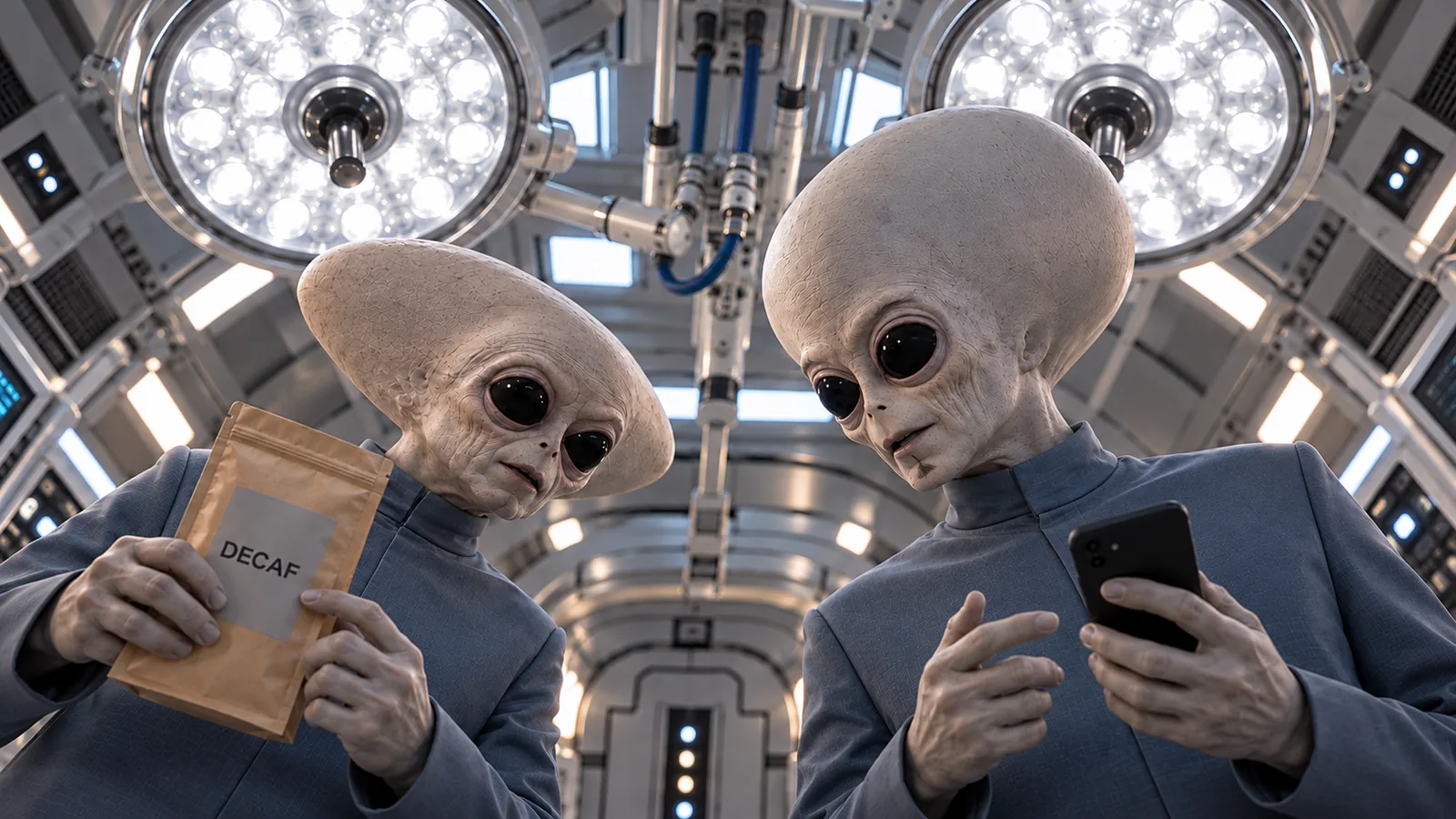
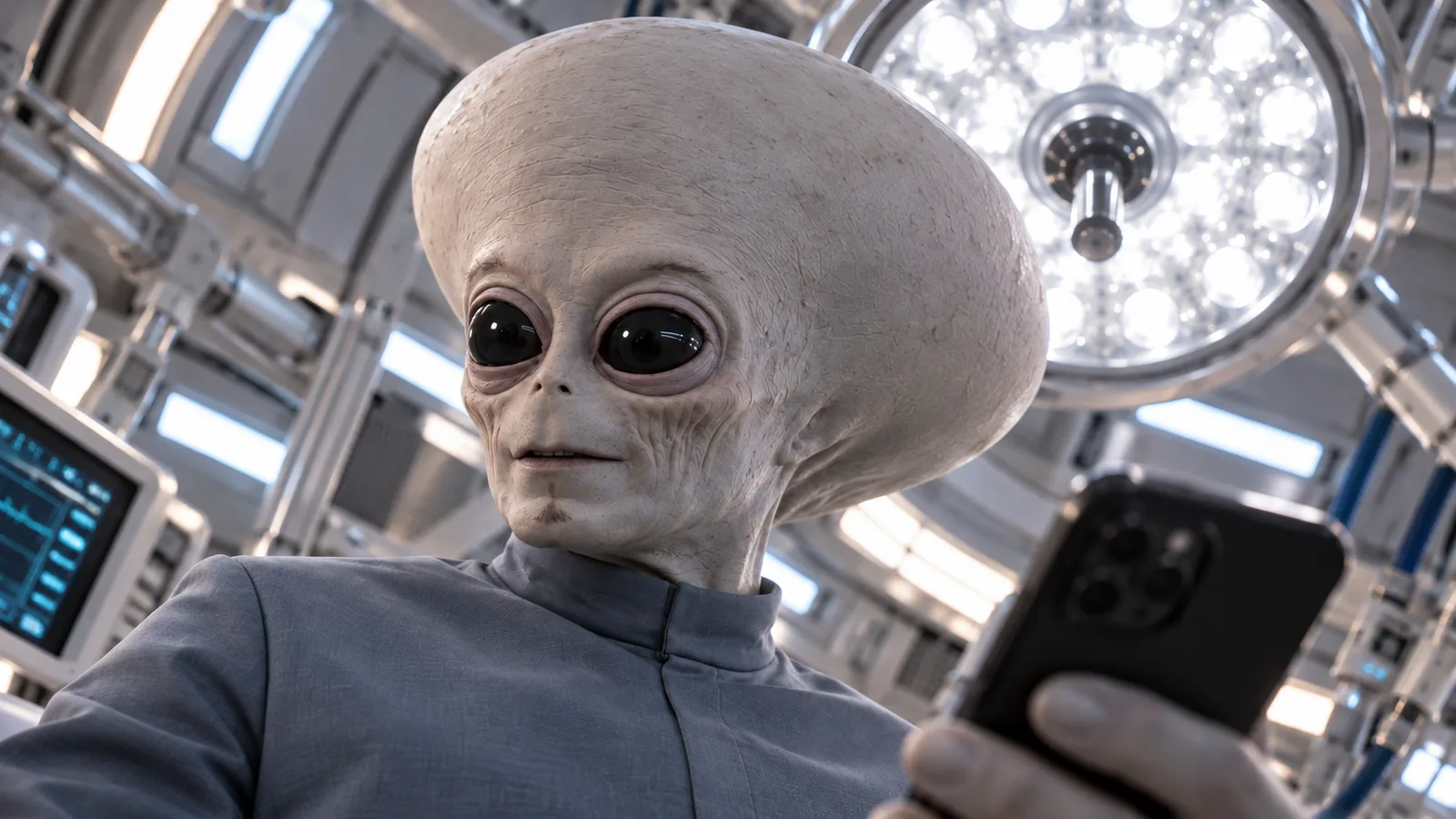
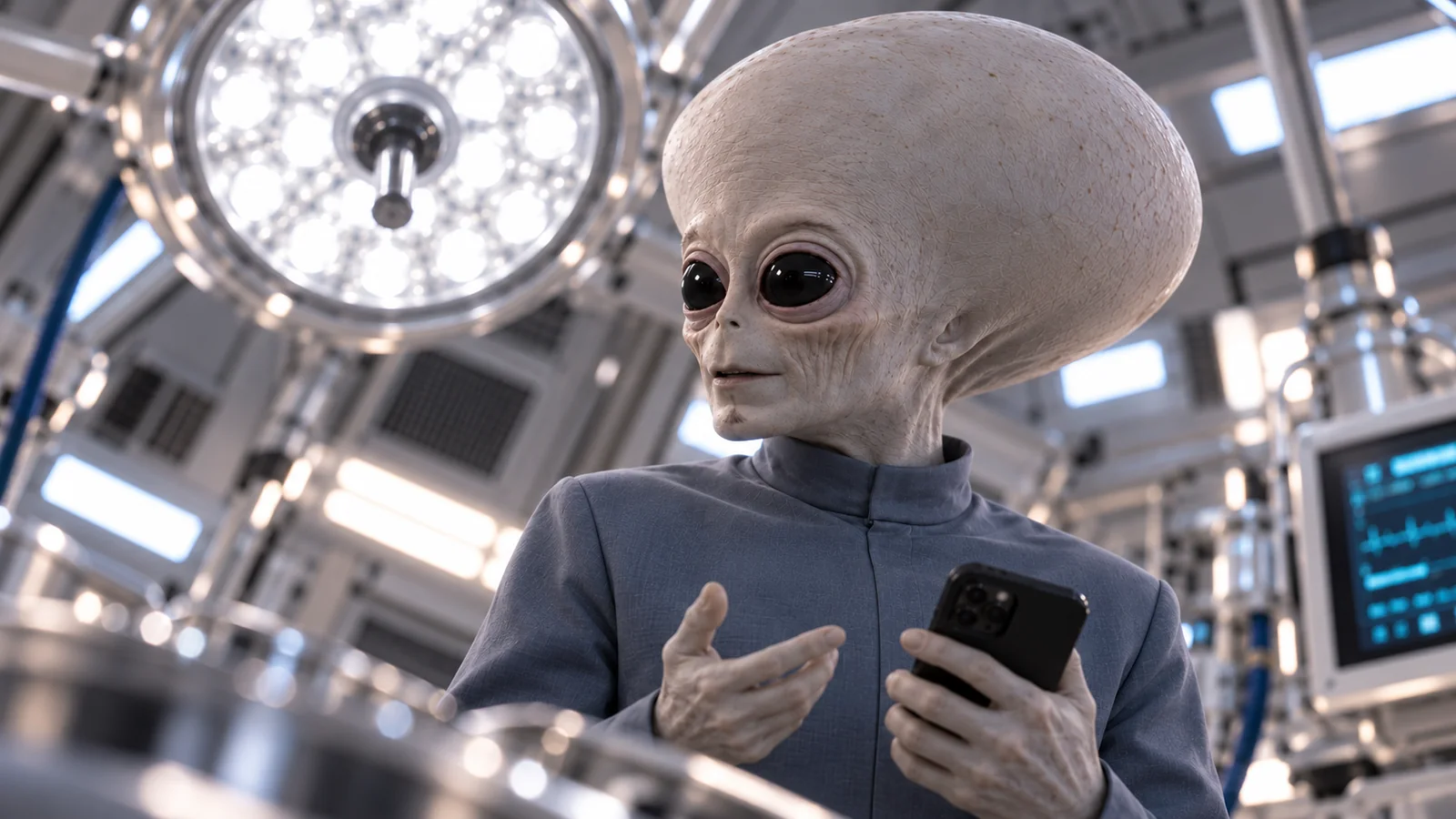
A man wakes up on an alien operating table. He has every reason to panic. The crew has a problem with loyalty points.
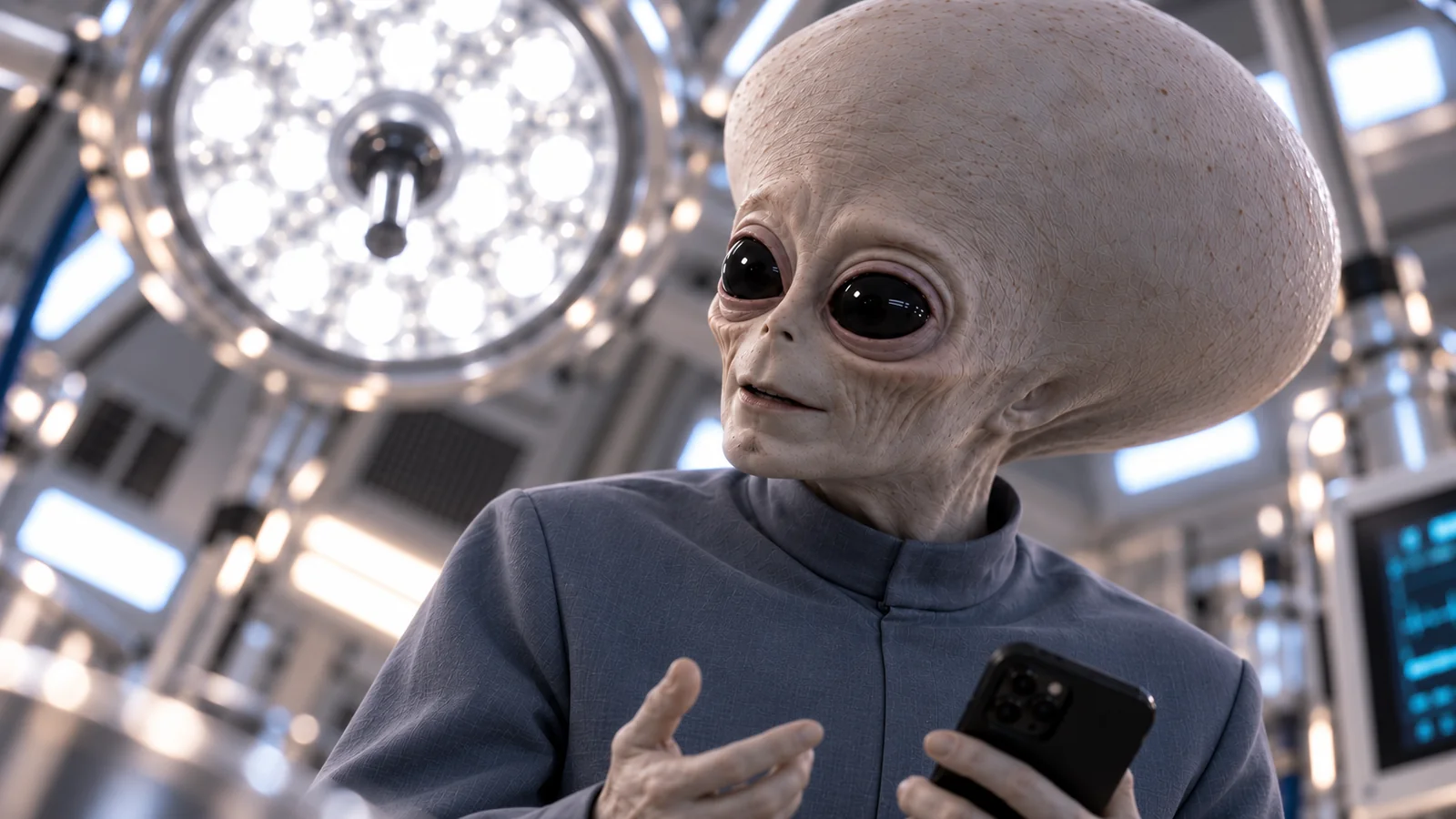
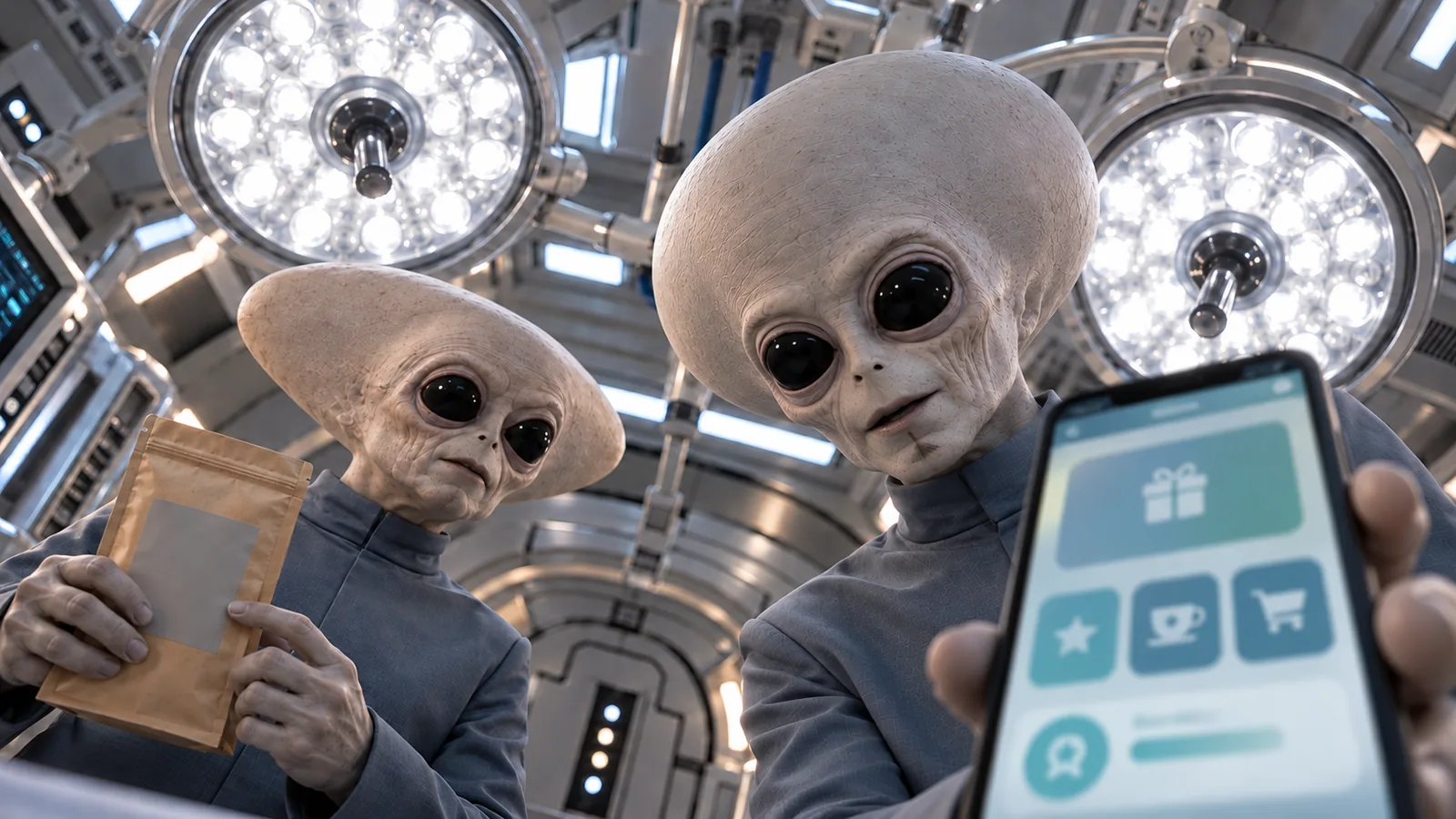
The coffee is decaf. They work nights. One alien is defending the purchase because the app is offering rewards. The situation is absurd; the conversation is familiar.
That contrast is the idea behind Night Shift: a comedy commercial that connects an imagined world to an everyday product need. The production had to make the performances, pauses, and product finish work together.
- Project
- Original studio concept / Fictional coffee brand
- Creative & production
- Josh Good / Make Good Studio. Concept, character and brand development, AI production, editing, sound and finishing
- Format
- 34 seconds / 1920 × 1080 / 24 fps
- Production focus
- Comedy built around dialogue, character continuity, and a clear product finish
02 / Brand development
Make the coffee
worth remembering.
The joke begins with the wrong bag of coffee. The film ends with an identity that needs to hold its own.
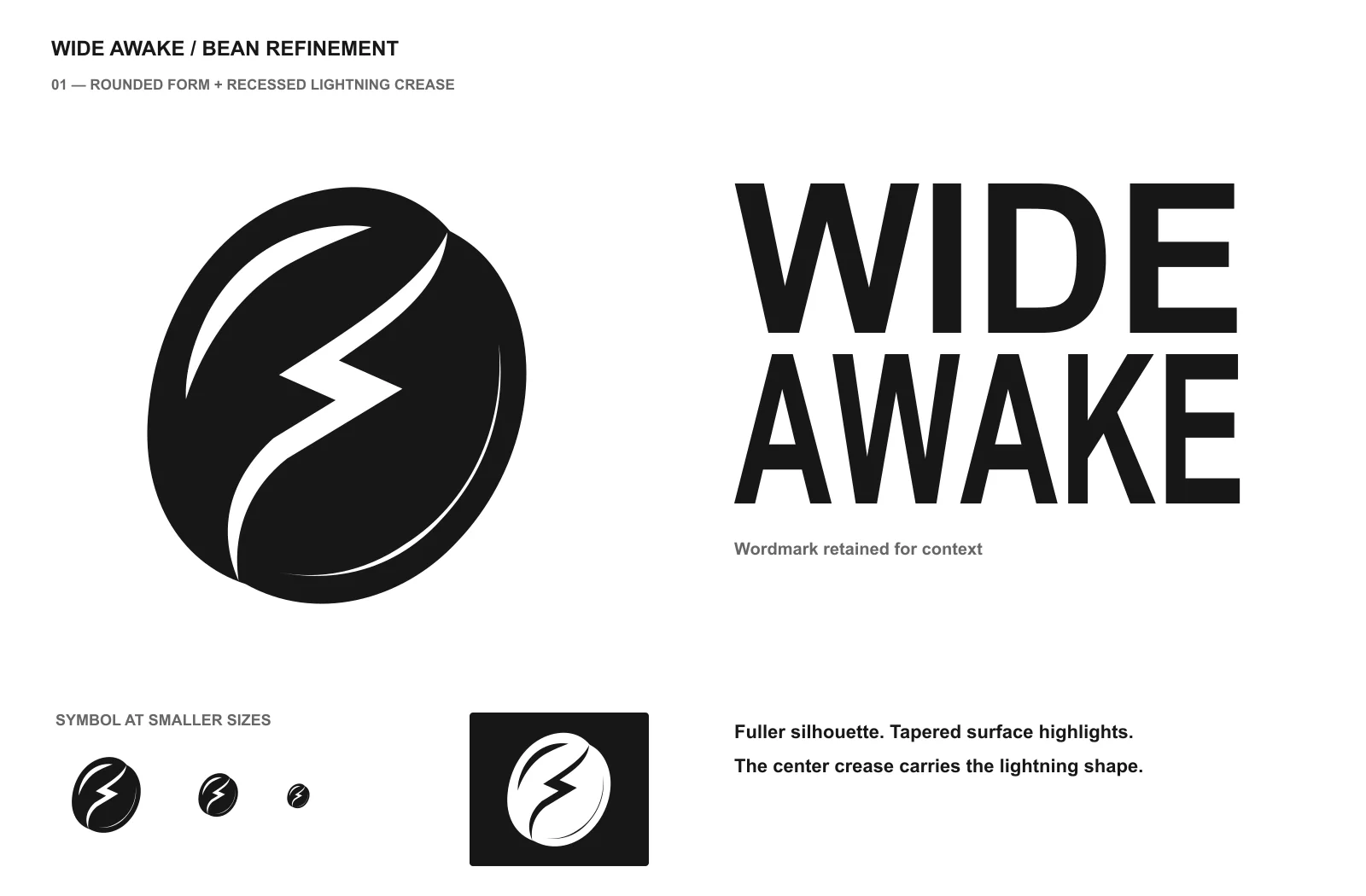
A bean first. A bolt second.
Wide Awake began with a name, a product idea, and several visual directions. The mark needed to connect coffee with energy without losing the recognizable shape of a coffee bean. We explored a dimensional bean with a lightning shaped seam, rather than letting the bolt replace the bean entirely.
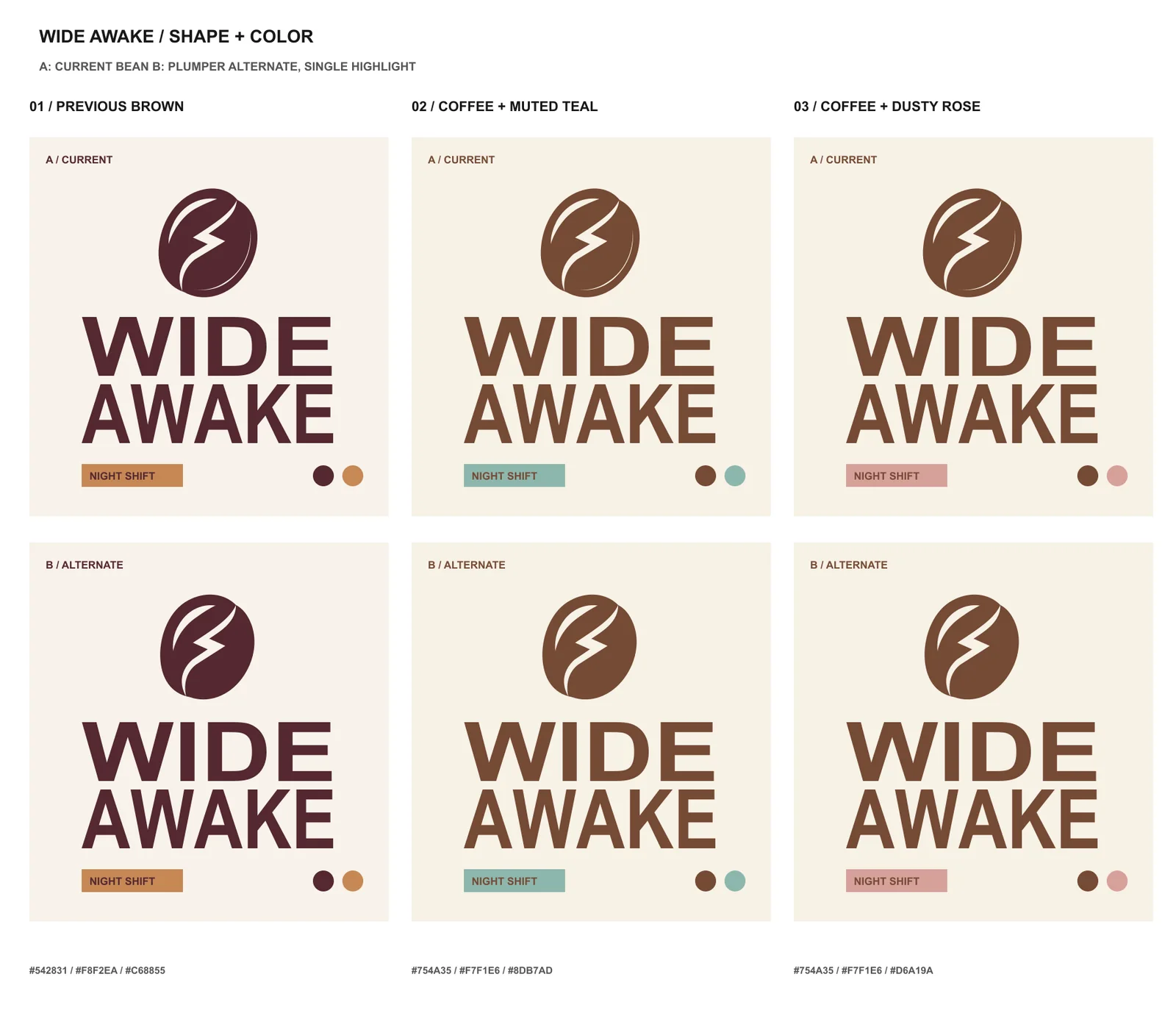
The studies below separate two decisions: the shape of the symbol and the color system around it. That made it possible to keep refining the mark while comparing how the brand might feel on a bag and mug.
Warmth inside a cold room.
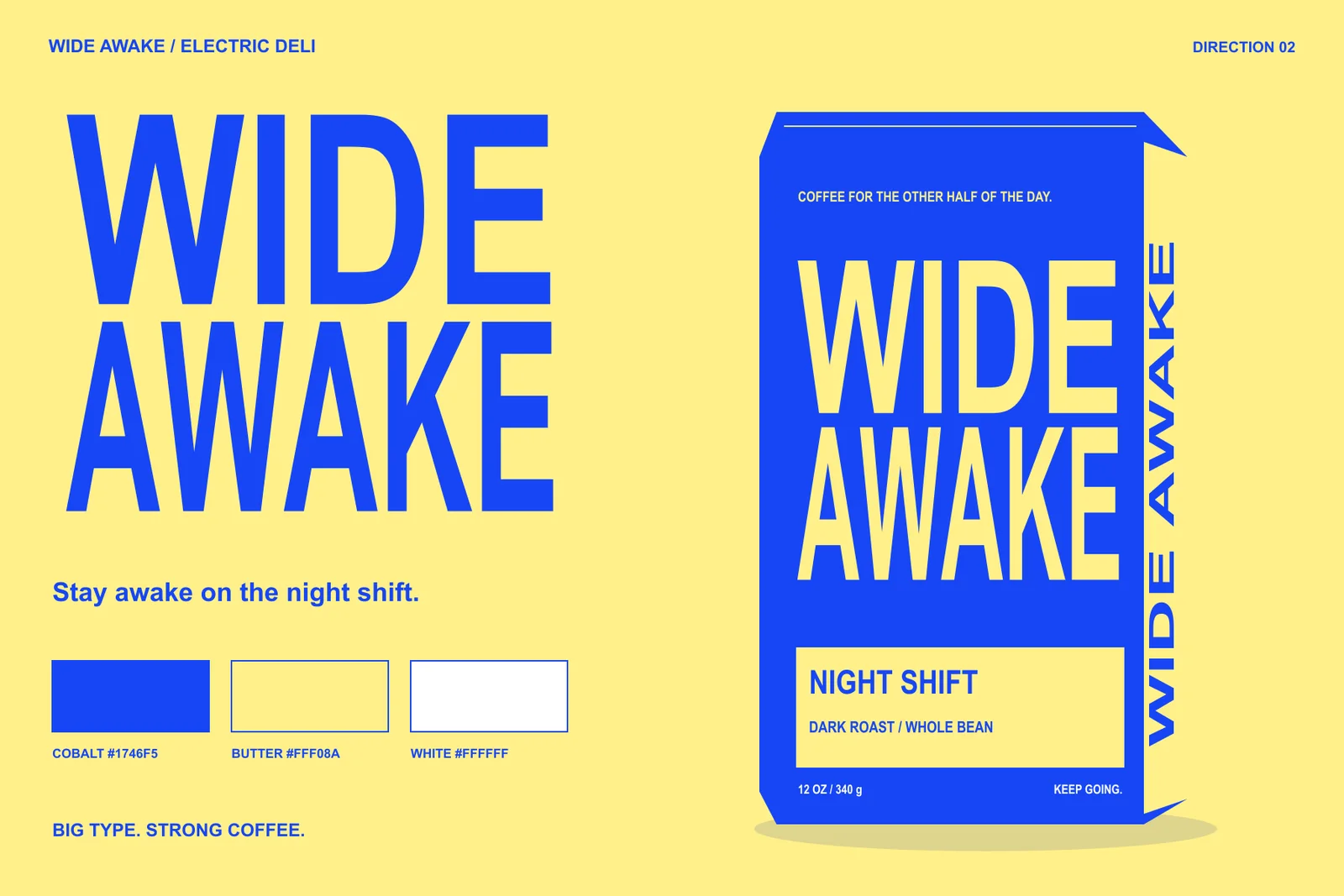
An earlier yellow direction had plenty of energy, but the chosen palette moved toward coffee brown, warm cream, and muted teal. Those colors give the product some warmth against the steel spacecraft interior.
The approved direction is the current bean in the second color option. The finished product image carries that choice into the film. The exploration boards document the decision, rather than representing several finished identities.
See an earlier brand direction
03 / Characters & world
Three characters.
One believable space.
The audience should be following the conversation, not noticing a different face or a different room after each cut.
Give identity its own reference.
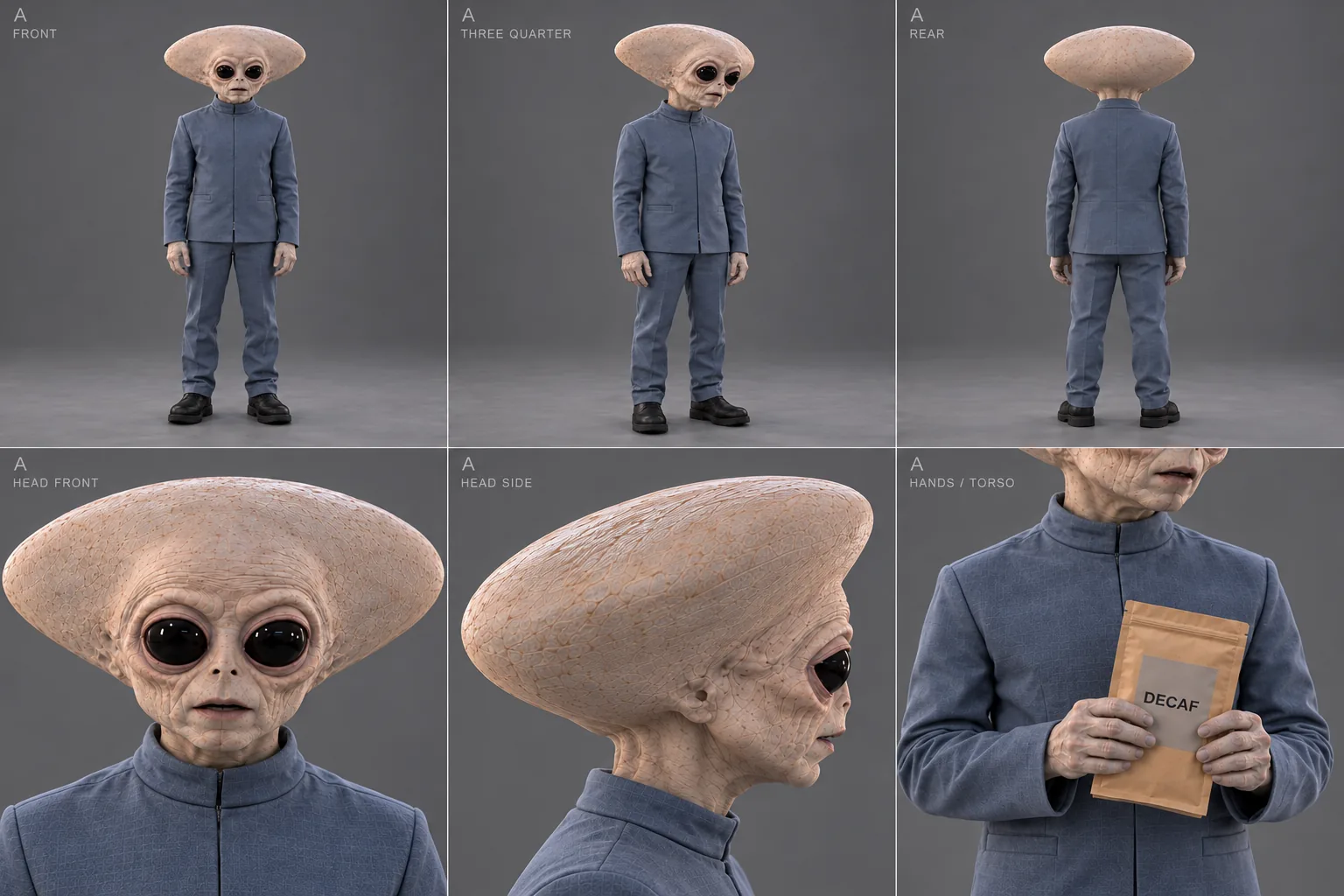
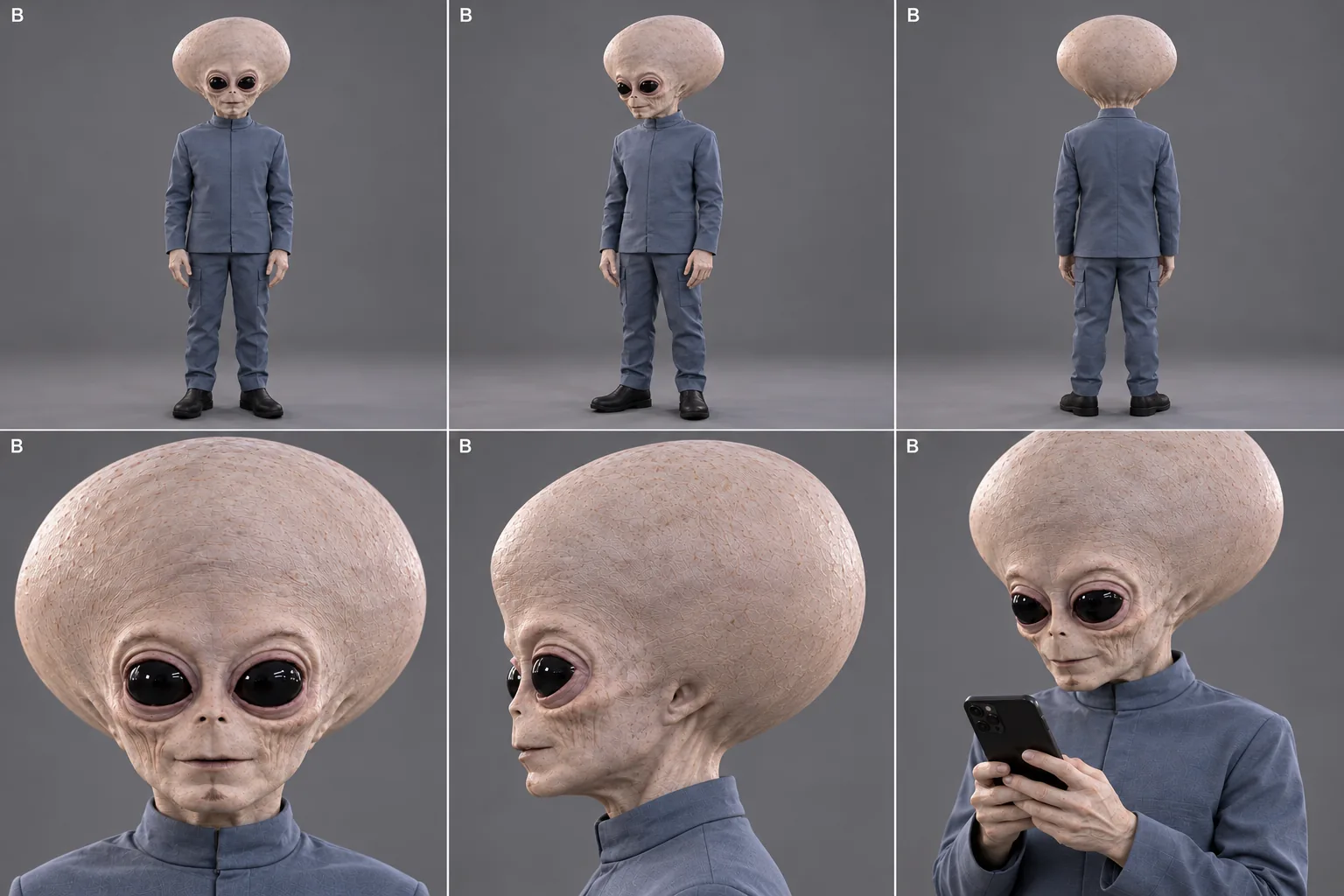
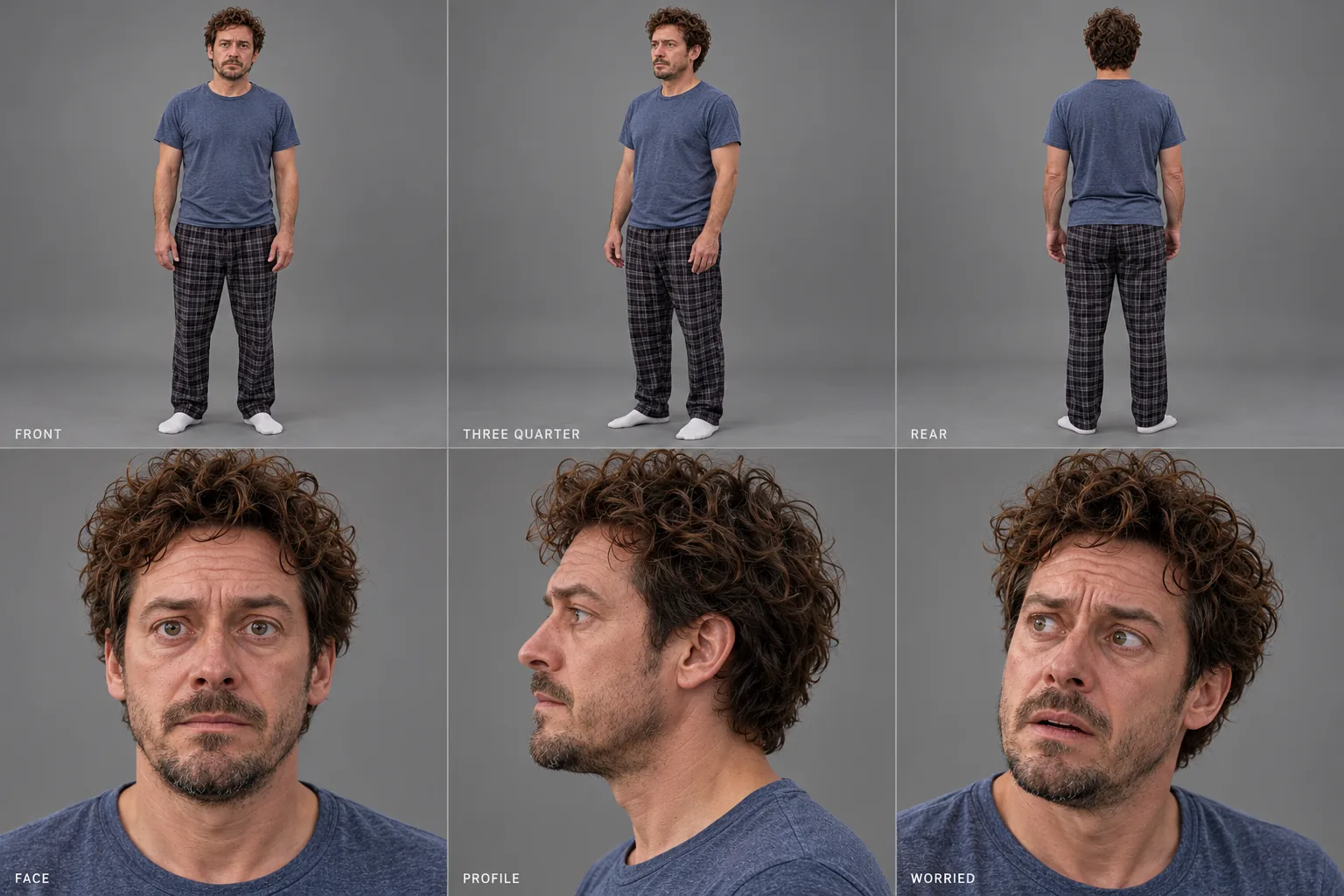
Separate reference sheets establish the two aliens and the human patient. Faces, clothing, and proportions have a common starting point while individual storyboard frames define the camera angle and action.
The aliens share a world and wardrobe, but need to read as two distinct people in the conversation. The patient supplies a different emotional register: frightened, frustrated, and trying to be heard.
Keep the geography stable.
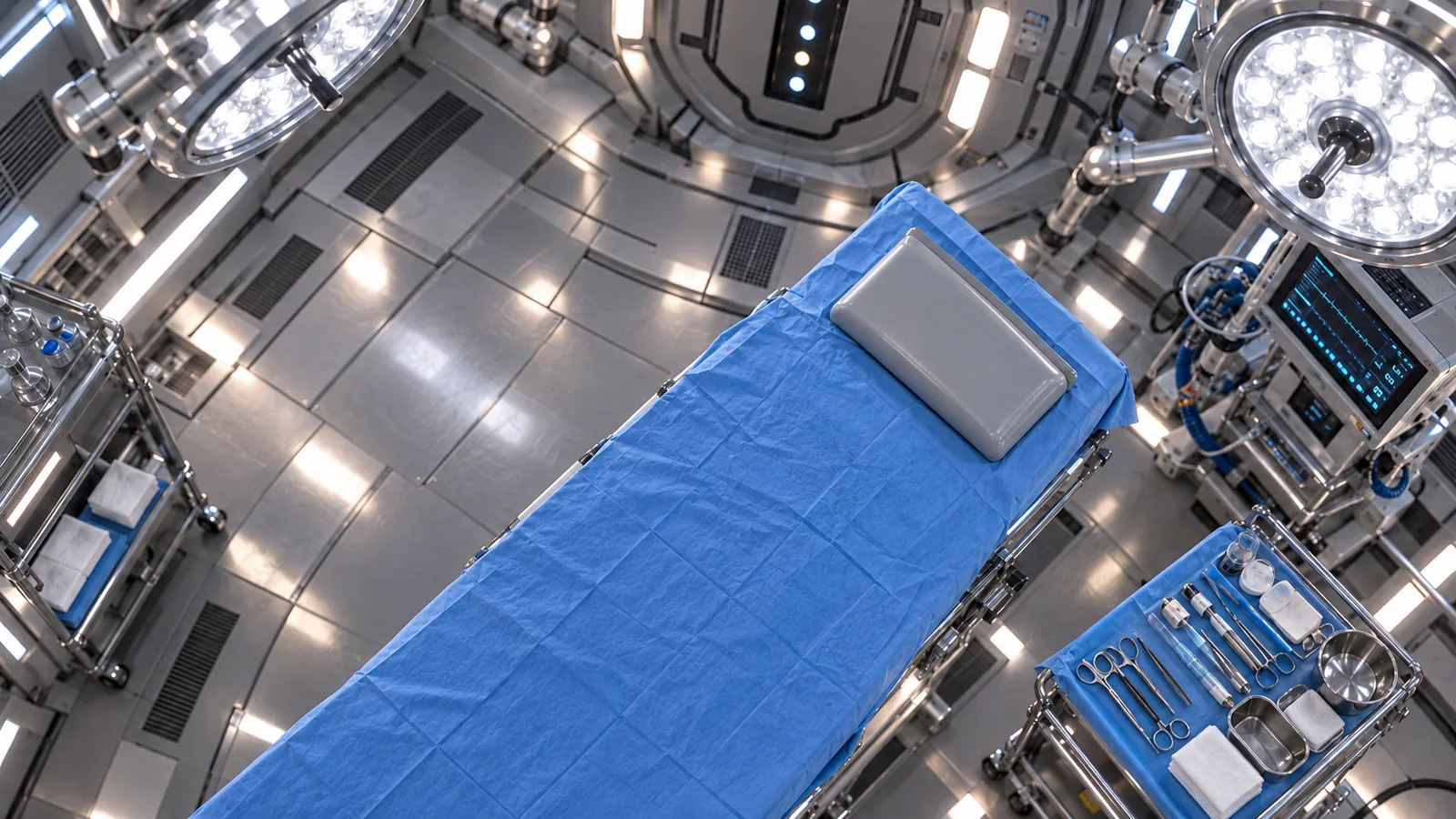
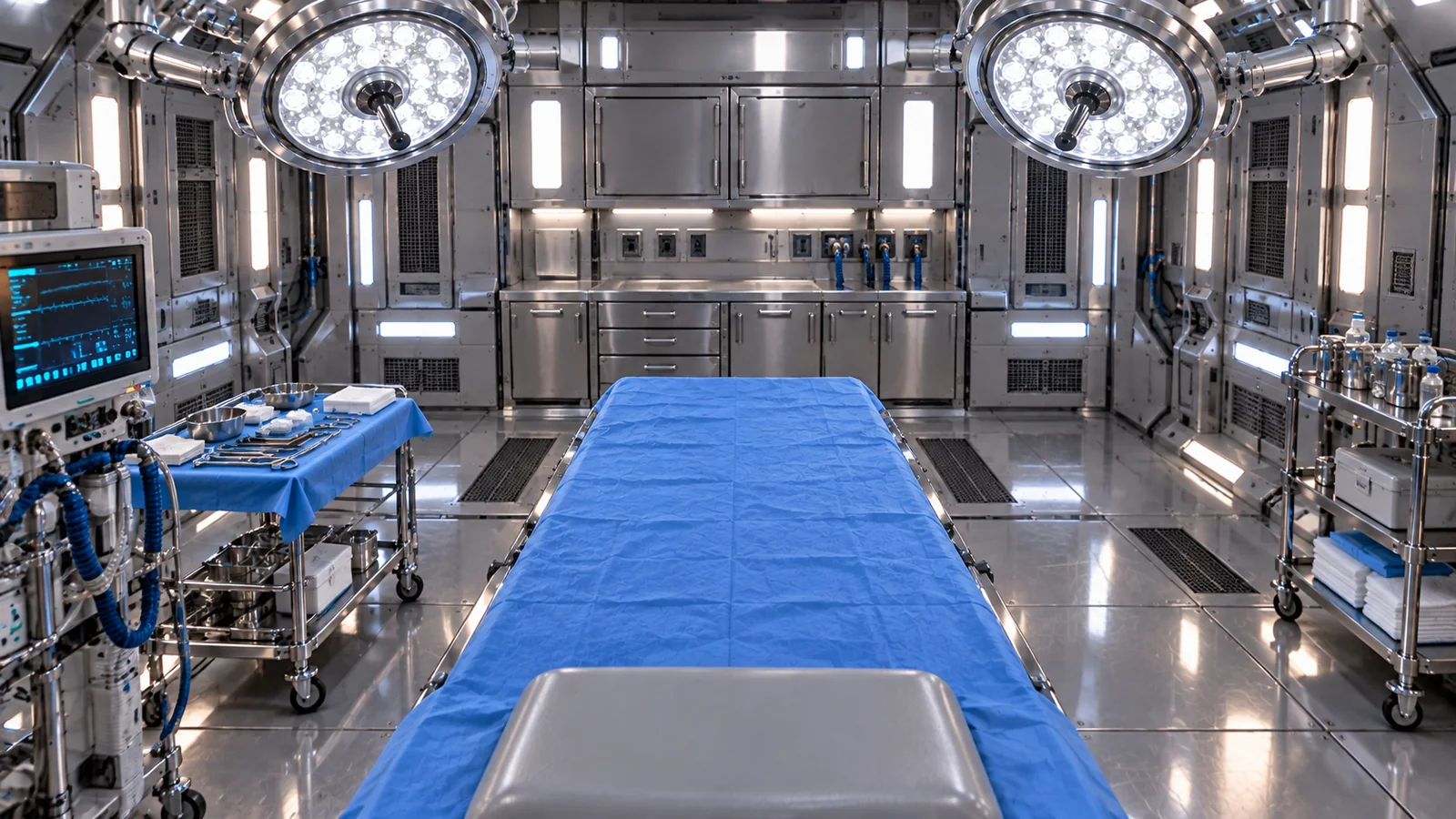
The operating room has its own references: curved architecture, practical strip lighting, metal surfaces, and the table at the center of the scene. Reverse angles need to feel like the other side of that same space.
We review the references against adjacent shots to catch changes in faces, props, lighting, and camera geography. The sequence needs to feel continuous in the order the audience will see it.
Give the props an owner.
Character continuity includes more than a face. Alien A owns the coffee complaint and the bag. Alien B owns the phone and the rewards logic. Keeping those roles clear makes a cut between them immediately understandable.
The sheets also establish pale gray skin and entirely black eyes, with highlights rather than visible whites. Those details need to survive new angles and expressions.
Build the patient as a person.
The human character has his own reference sheet for face, curly hair, clothing, and proportions. His emotional range is different from the crew’s: the first reaction is panic, while the later plea needs fear and exhaustion.
A reusable identity reference lets us work on those expressions without treating every shot as a new casting decision.
04 / Storyboards
Work out the joke
before the moving picture.
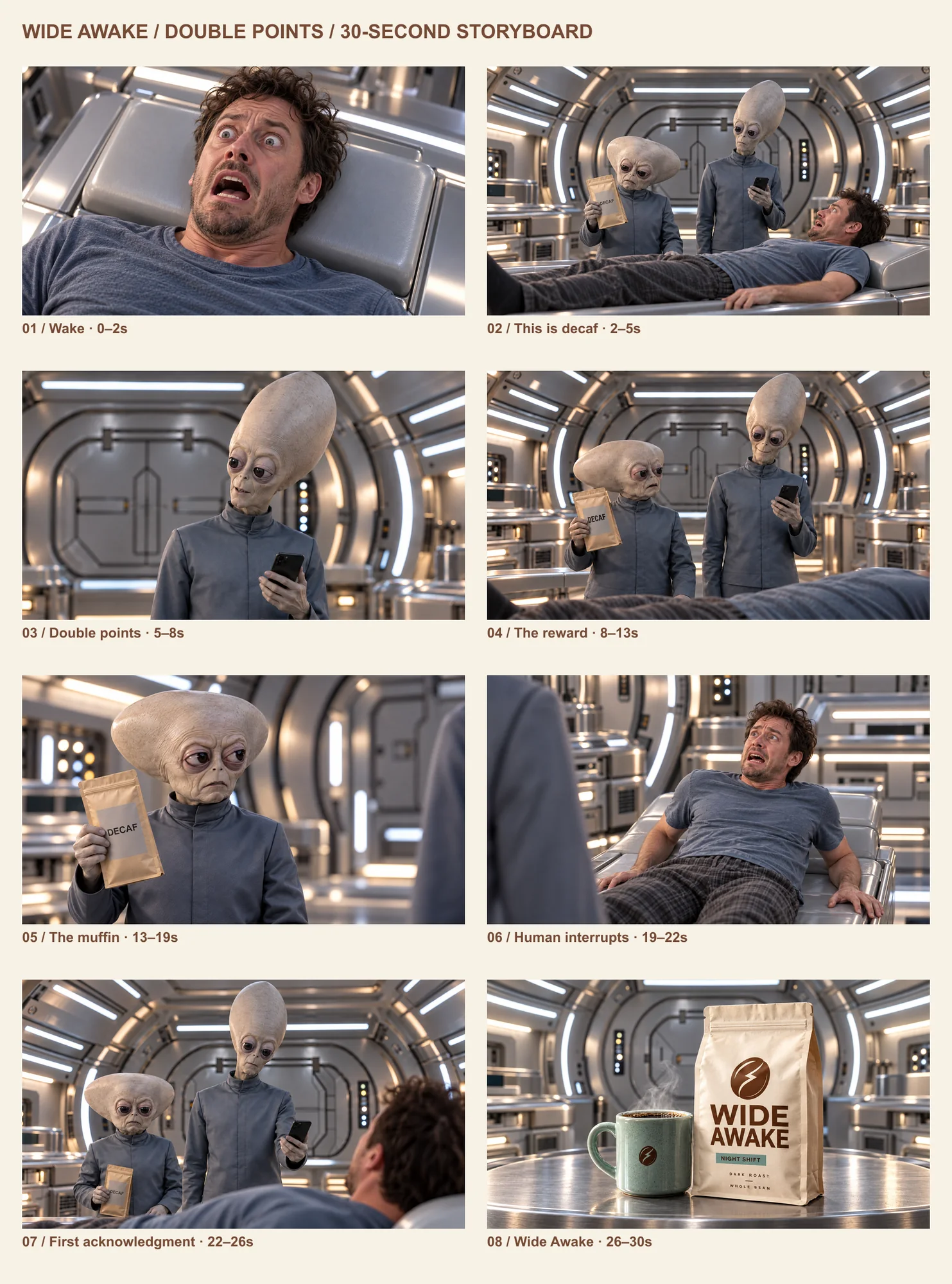
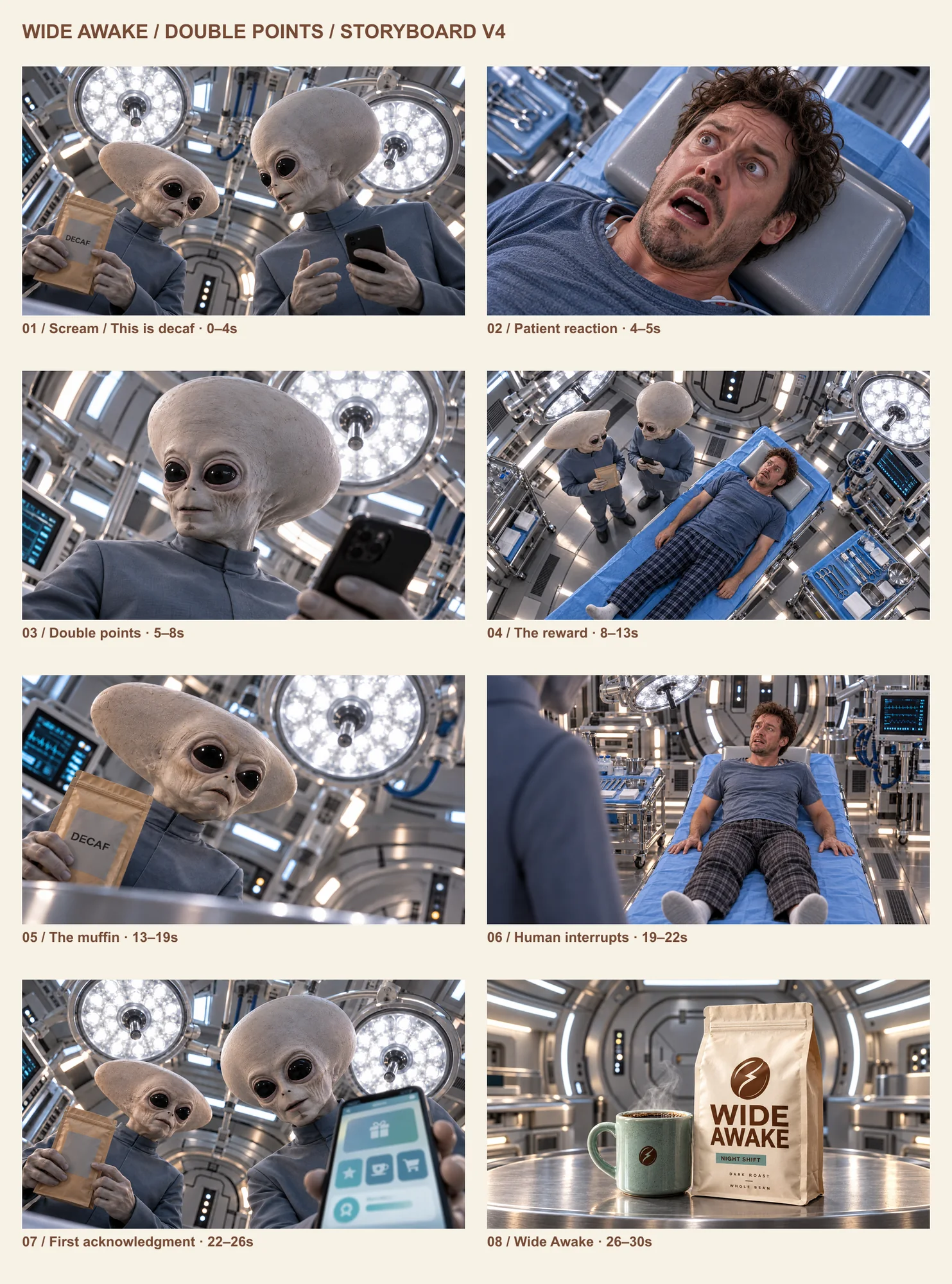
AI storyboard images let us review the story, coverage, and product finish as a sequence.
Review the sequence, then the shot.
The early boards establish the patient, the two aliens, the argument, and the coffee finish. Later passes refine who is looking where, which character holds each prop, and how the human’s interruption fits the conversation.
Seeing those images together exposes a problem that a handsome single frame can hide: a sequence may still be confusing. We used ChatGPT image generation to develop the boards and references, then revised the individual compositions before generating motion.
Keep planning flexible.
The boards are a production conversation, not a promise that every panel will survive. An extra reaction after the double points line was removed in favor of extending the performance. The birthday muffin payoff needed its own place in the sequence.
These two overviews are historical planning passes. Further character, opening, and human revisions followed them. The final film’s eleven shots are listed in the edit chapter.
05 / The opening
Wake up
in the right place.
The first view needs to feel like the patient opening his eyes, with enough continuity to make the room readable immediately.
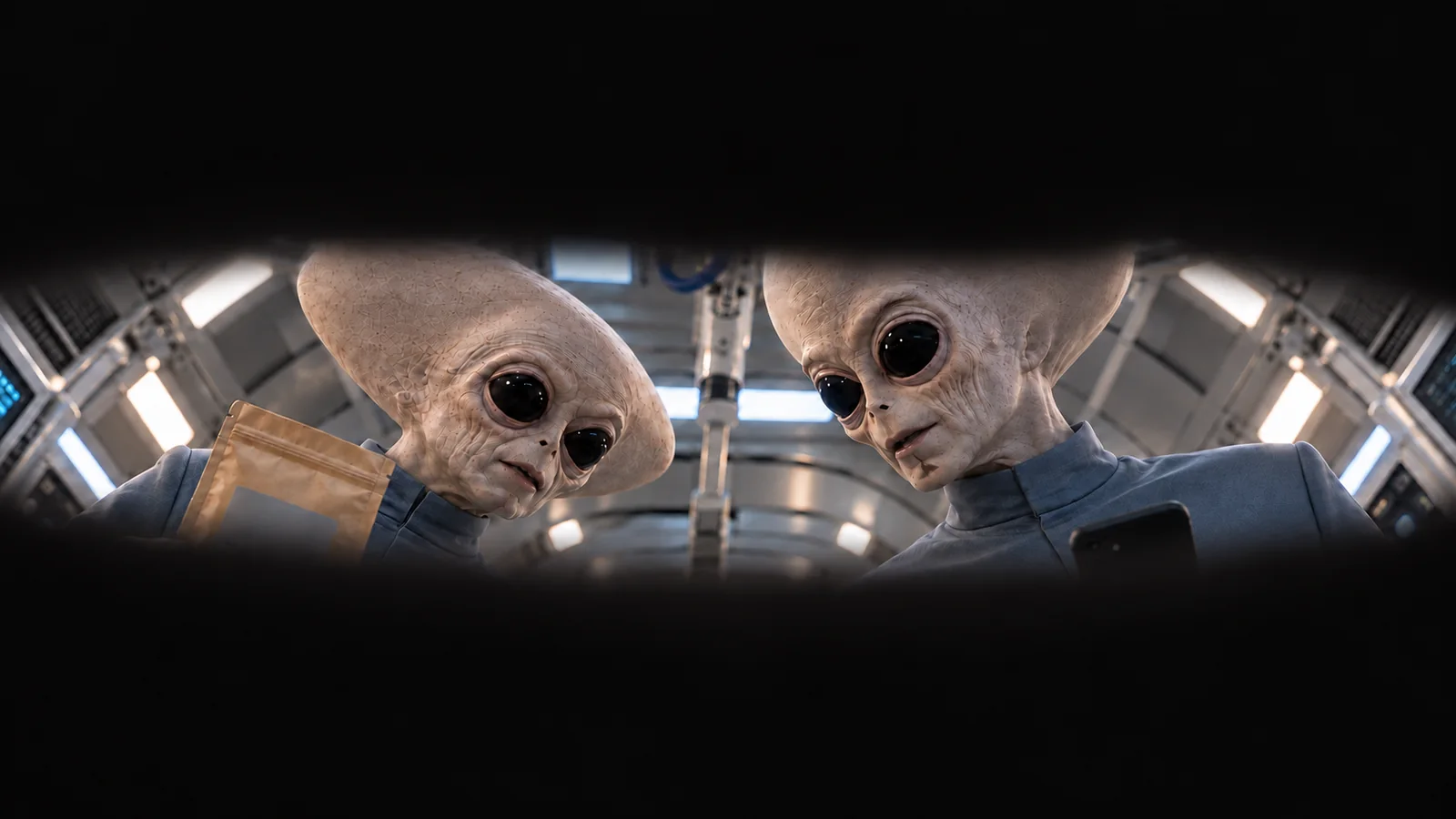
Protect the viewpoint.
Early opening tests could lose a lamp, show the patient in his own point of view, or leave the aliens waiting motionless. The direction had to preserve the room while giving the crew something to do.
The selected approach uses a dark eyelid image and a fully open reference. The two circular lamps stay overhead. The bag and phone remain with their owners, and small overlapping gestures keep the scene alive.
Use only the part the edit needs.
The generated opening source is longer than the opening in the film. The final edit uses a short waking movement, then cuts to the patient’s scream. Its job is orientation, not a long reveal that delays the conversation.
This distinction matters throughout the production: a source take can satisfy a motion test and still need a tighter selection to serve the commercial.
Both circular surgical lamps remain overhead in their fixed left and right locations; preserve the equipment and room. Camera remains the patient’s upward first person perspective throughout.
The direction also excludes a visible human face in this view and asks for purposeful alien gestures. The starting and ending images establish the composition; the direction defines what should move between them.
06 / Voice direction
Make them sound
like coworkers.
The voices had to carry a conversation. A collection of interesting voices was only the beginning.
Audition the cast in ElevenLabs Flows.
We used ElevenLabs Flows to organize and submit voice auditions by role. Alien A needed a dry, conversational delivery. Alien B could sound unusual, but still needed to believe that the rewards were a perfectly sensible reason to buy decaf.
Those isolated auditions helped explore the cast. They also exposed a limit: a character delivering all his lines in a row can sound like a monologue, rather than somebody responding to a coworker.
Develop the exchange as a scene.
We then generated full conversations using ElevenLabs’ multi speaker Text to Speech workflow.
Hearing the interleaved lines made the responses and pauses easier to judge. The work moved from choosing an unusual voice to dialing back theatrical delivery, refining pronunciation, and finding a convincing hesitation before the night shift objection.
- 01
Audition by role
Explore character voices in Flows.
- 02
Hear the conversation
Generate interleaved dialogue with the cast.
- 03
Direct the details
Refine delivery, consonants, and pauses.
- 04
Guide the video
Use line audio as a performance reference.
An isolated character audition
An early take groups Alien B’s lines together. This is a casting test, before the more restrained conversation direction.
A full conversation development take
The two aliens and the patient trade lines in a later conversation test. It is development audio, not the finished commercial soundtrack.
The selected hesitation pickup
A separate pickup for Alien A refines the pause in “But… we work nights.” Josh selected this development take; the final video performance was reviewed separately.
Give each revision a purpose.
Alien B’s delivery moved from theatrical toward matter of fact. The birthday muffin needed to sound like a persuasive justification, not a performer announcing a punchline. A pronunciation pass addressed the final consonant in decaf. Separate pickups explored the pause in “But… we work nights.”
Those are acting decisions. Keeping the revisions specific makes a new take useful to compare, instead of simply asking for another random performance.
Carry the performance into picture.
The dialogue shots use line audio as a reference for the generated video. The human shots also use audio references, with different visual controls for the scream and the later plea.
The selected video takes produce dialogue of their own, and generated speech forms part of the finished soundtrack. The examples above show the voice development that guided the scene, with the final performances selected and trimmed in the edit.
07 / Directing the performance
Let the situation be strange.
Keep the delivery ordinary.
The joke depends on the difference between the patient’s emergency and the crew’s priorities.
Direct the response, not just the line.
The alien conversation needs the rhythm of a mundane workplace disagreement. The patient’s reactions need urgency without turning into exaggerated comic mugging. A line can be correct while the performance still feels wrong.
Shot direction therefore includes where the character looks, how much they move, what happens after the words, and when the mouth should settle. Small choices matter when a pause is part of the joke.
Refine the human shot before animating it.
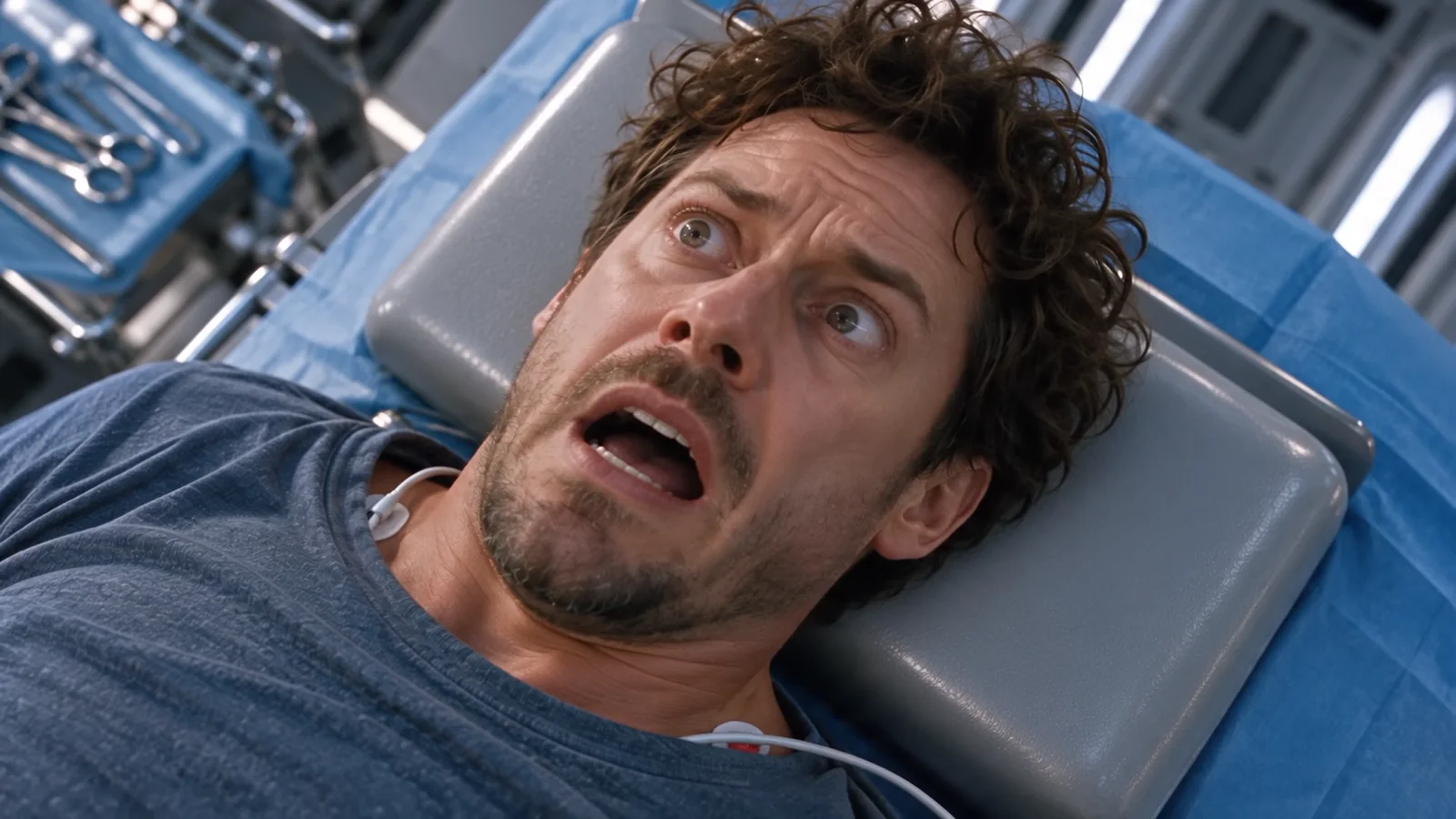
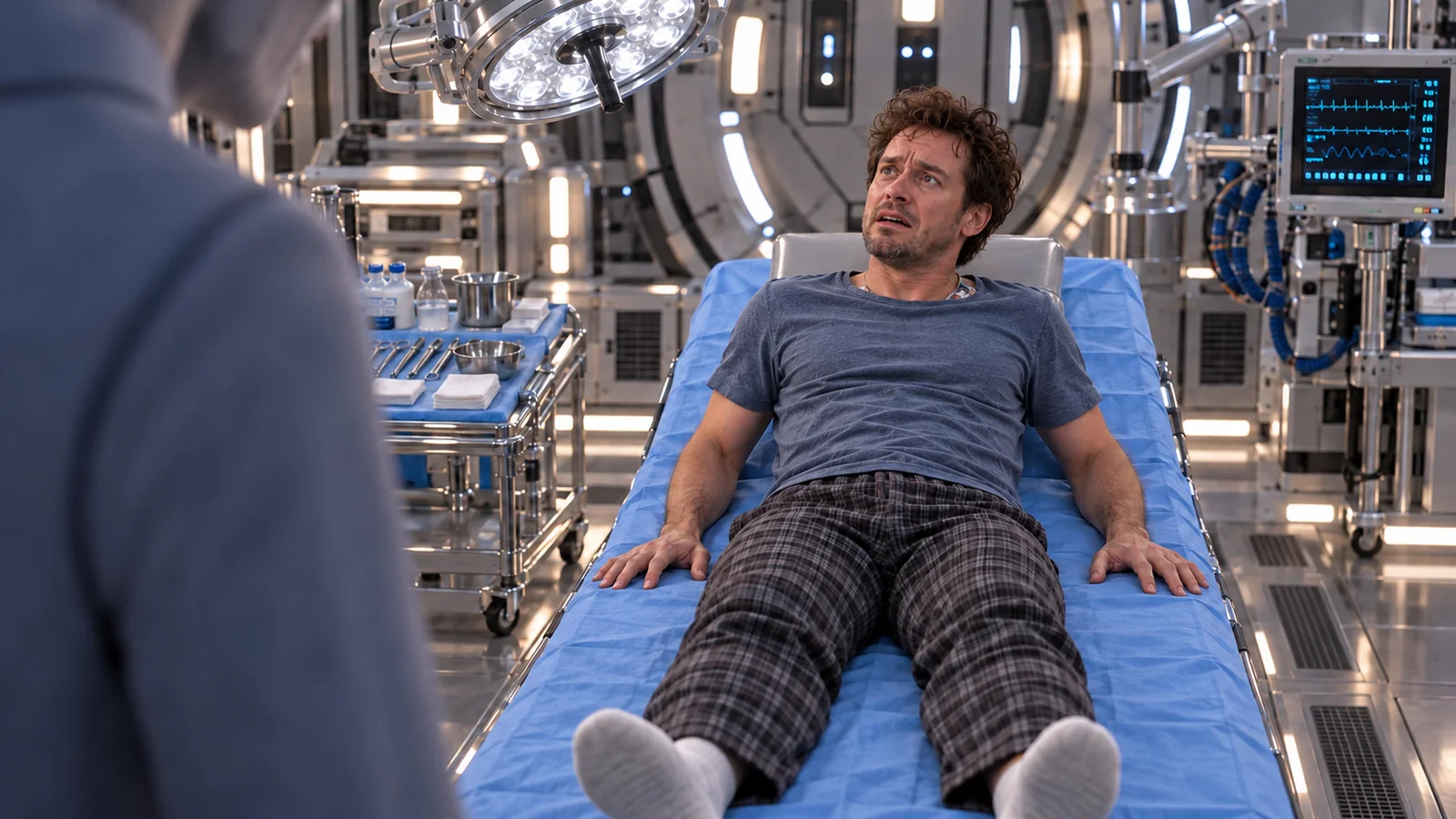
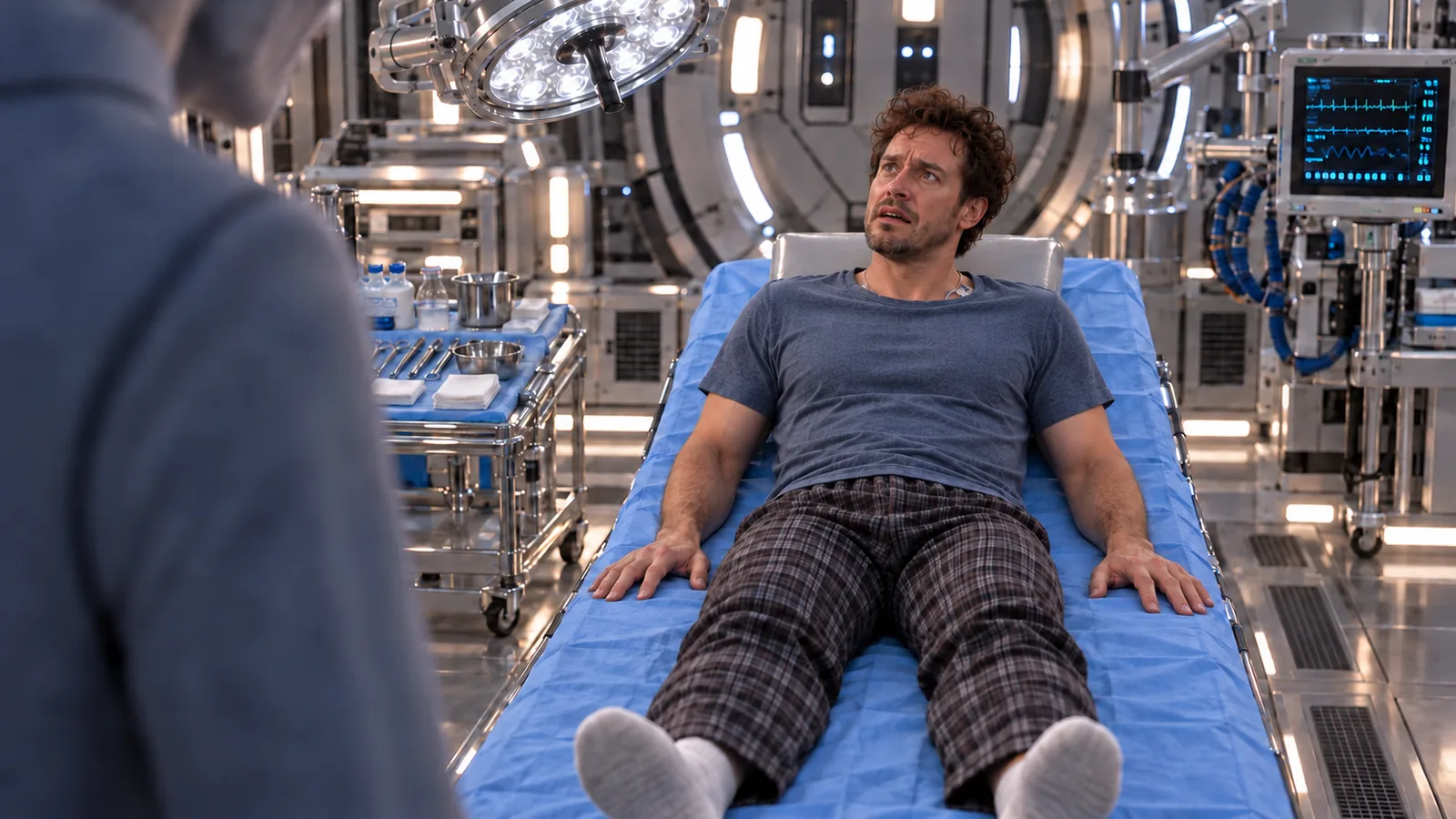
The “go home” moment went through reference revisions to bring the patient’s face, body proportions, and expression into line. The selected starting frame retains the room geography and a restrained, pleading expression.
For that shot, the video inputs combine the starting composition, a dedicated human reference, the empty room, and an audio performance. Each reference has a different job; the resulting take still has to work in the edit.
Correct the scale without recasting.
The instruction for the selected image was specific: reduce the whole head, including the hair, while keeping its position and orientation. Restore some shoulder and upper torso volume without stretching the body or changing the camera.
That separates likeness from proportion. A face reference can be correct while its scale inside the scene still feels wrong. The selected ChatGPT image became the starting frame for the final plea.
Assign each input a job.
For the plea, the starting image controls composition and pose. The character sheet controls identity. The empty room supplies materials, rather than permission to change the camera geography. The audio reference supplies a vocal performance.
An intermediate Seedream image edit was also explored during the continuity work. The selected corrected starting image shown here came from ChatGPT; it was the image sent into the final video generation.
| Selected shot | Visual inputs | Performance direction |
|---|---|---|
| The plea | Corrected starting image, human identity sheet, empty room reference | Line audio, restrained movement, and attention toward the alien |
| The scream | Starting image and approved video performance reference | Audio plus the timing of the scream, breathing, and searching looks |
Character sheet defines exact human identity; room reference supplies materials only, retain start image camera angle and geography.
Giving each reference a defined role makes it clearer what should carry across to a new take, and what still needs to be checked afterwards.
A resolution change is another take.
The early scream had a useful onset and searching looks. Some later generations shortened the scream or began with the mouth already open. For the selected 1080p version, we supplied the approved performance video alongside the starting image and audio, then reviewed the new take as a performance.
The brief asked to preserve the onset and duration of the scream, the transition into anxious breathing, and the timing and direction of two searching looks. A higher resolution setting alone could not establish that those choices had survived. The new take still needed to be watched and selected.
Selected footage and tools
The final sequence uses Flux for the opening, H3 Max for the alien dialogue and product movement, and Seedance 2.5 for the human performances. The selected shots were assembled and finished in DaVinci Resolve.
The human “go home” shot combined a starting image, a separate character sheet, the empty room and an audio performance. The scream used a video reference to preserve its action and timing. Voice development included ElevenLabs auditions; generated speech in the selected video takes also forms part of the final soundtrack.
These notes describe the selected sources in the finished film. Earlier tests explored other versions and do not all appear in the edit.
08 / The product
Bring it back
to the coffee.
The product finish needs to belong to the world, with a brand that reads clearly once we get there.
An identity built for the shot.
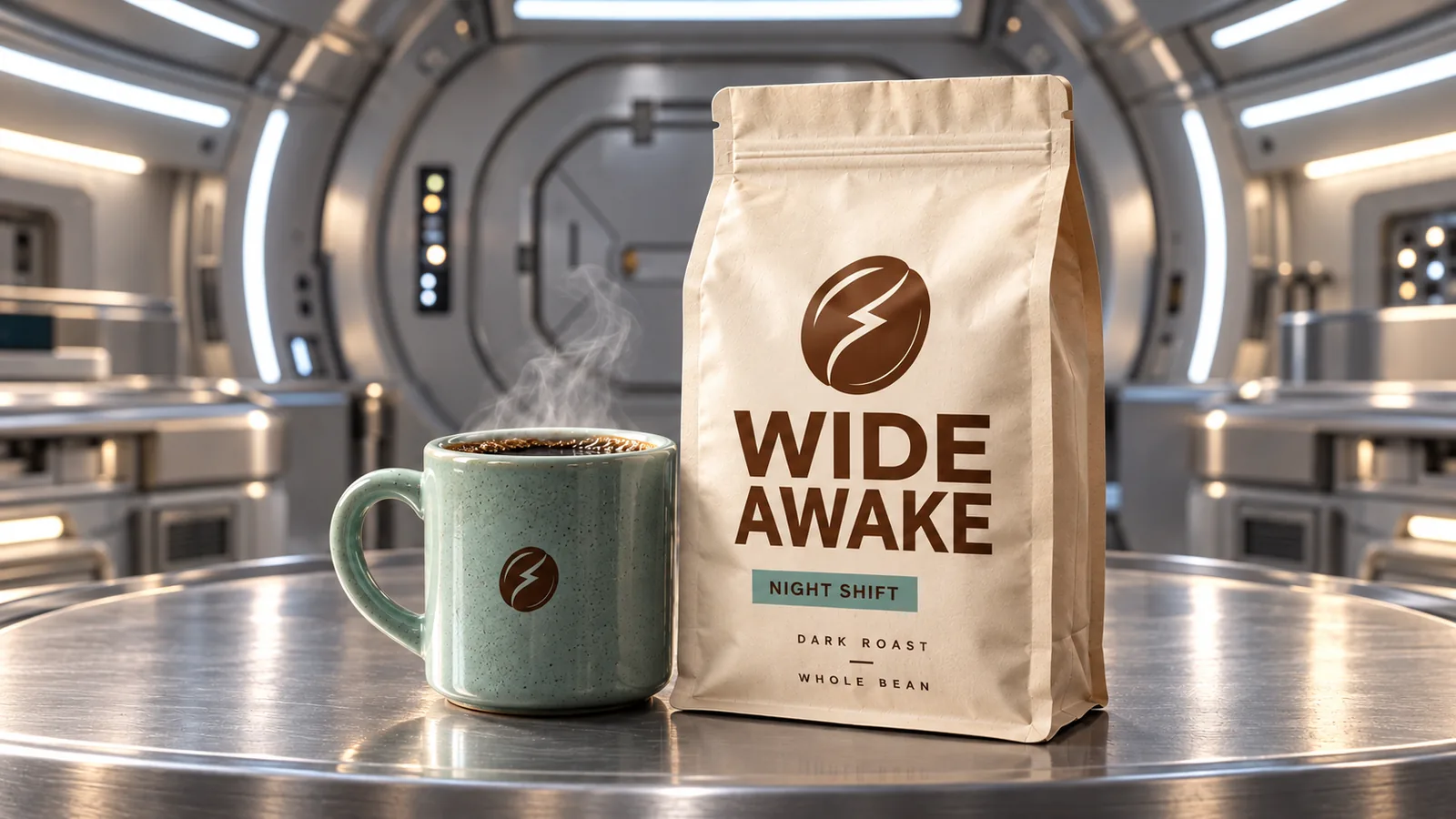
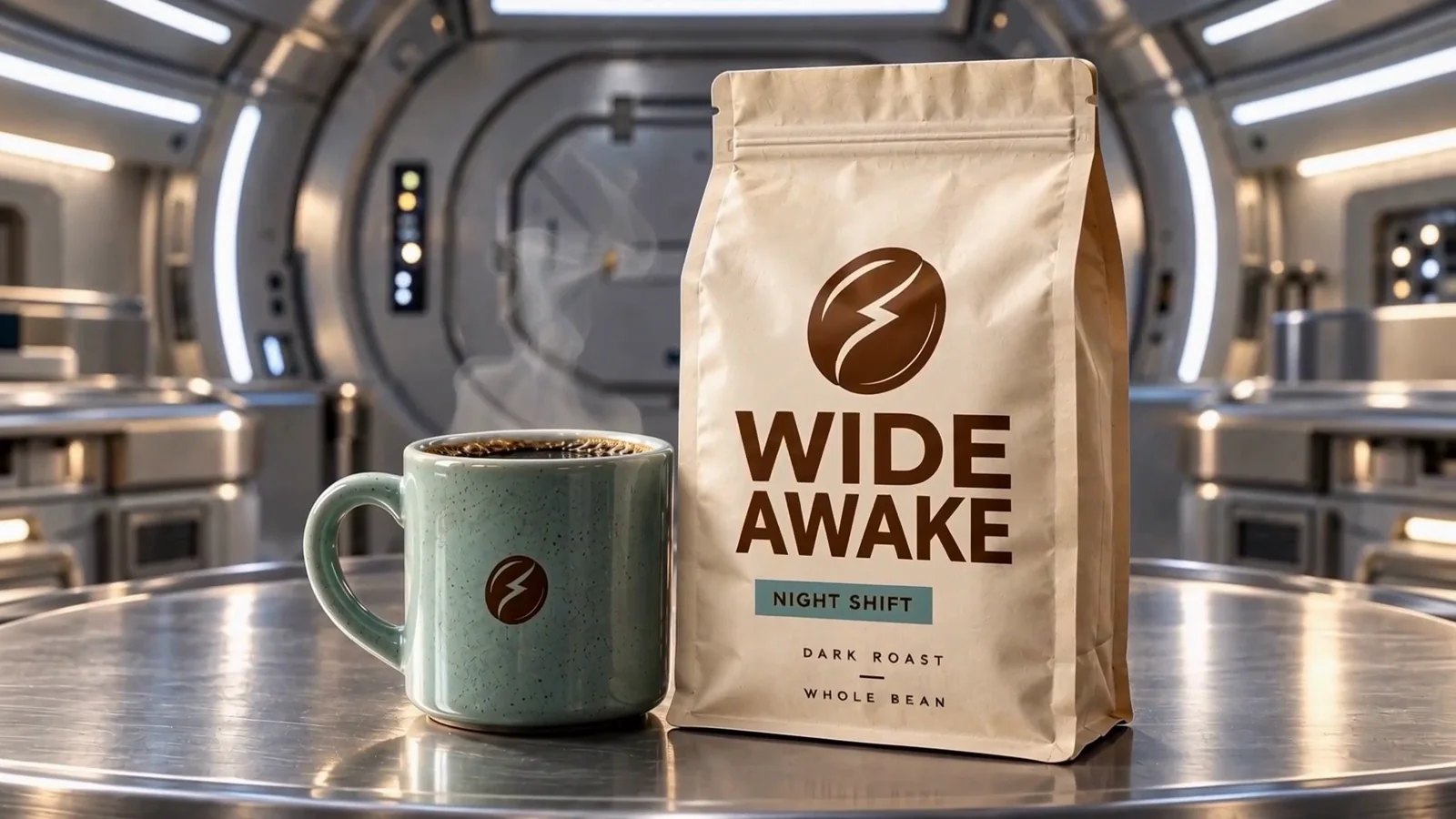
Wide Awake is an original coffee identity developed for the film, with a symbol combining a coffee bean and lightning bolt, a bold wordmark, and Night Shift packaging. The bag and mug give the closing image a clear visual hierarchy.
The decaf bag in the argument and the Night Shift product finish have different roles in the story. The audience needs to understand the mistake, then remember the coffee being advertised.
A quieter ending.
After the conversation, the product shot changes the pace. The package stays solid, the camera moves gently forward, and steam supplies a small amount of natural motion.
The final revision focused on two things: a visible forward camera move and fine steam that rises and dissipates naturally. The bag and mug stay still, with the lettering and symbol readable throughout.
The motion direction asks for a straight push rather than an orbit, with the bag and mug held still. Fine steam should rise, break apart, and dissipate quickly instead of turning into a thick cloud. The lettering and symbol are the details to protect while judging the move.
09 / Edit & sound
The pause
is part of the performance.
The shots become a commercial when the conversation, interruption, and product finish share one rhythm.
Build the conversation in the edit.
We assembled the selected footage, dialogue, music, ambience, and effects in DaVinci Resolve. The human reactions interrupt a conversation that the aliens consider more important.
The timing gives each new twist in the rewards logic room to register. An extra reaction after the double points line was removed, letting that performance carry the beat. The birthday muffin payoff stays in the conversation before the patient’s plea brings the two priorities together. Unwanted speech tails and repetitions in the generated sources are cut away.
Keep sound intentional.
The opening panic, everyday dialogue, spacecraft atmosphere, and product close have different jobs. The mix needs to keep speech intelligible while supporting the setting and the change of pace.
Spaceship ambience and a very subtle bag rustle give the room and props a presence. Josh manually added a little reverb to the voices so they felt inside a metal spacecraft. Those choices support the scene without asking the effects to perform the joke.
The product hero source is silent. Music, dialogue, and effects remain on separate tracks in Resolve, with editable levels and fades. The music stays beneath the dialogue and lifts into the product finish.
Music: “Hidden Pathways” by Martin Landström, via Epidemic Sound. Voice development: ElevenLabs. Creative direction and production: Josh Good, Make Good Studio.
- The setupWake up
Establish the patient and the unfamiliar room.
- The conversationDouble points
The crew debates coffee and rewards.
- The interruptionGo home
The patient tries to get their attention.
- The finishNight Shift
Resolve on the product and brand.
Explore the final shot sequence and timings
| Time | Shot | Job in the sequence |
|---|---|---|
| 0:00.00 to 0:01.50 | Waking view | Orient the patient in the room. |
| 0:01.50 to 0:04.17 | The scream | Establish the human emergency. |
| 0:04.17 to 0:07.71 | The decaf complaint | Reveal what the crew cares about. |
| 0:07.71 to 0:09.54 | Double points | Introduce the rewards justification. |
| 0:09.54 to 0:12.04 | We work nights | Make the purchase more unreasonable. |
| 0:12.04 to 0:14.38 | Three more bags | Extend the loyalty logic. |
| 0:14.38 to 0:18.38 | The objection | Give the contradiction room to register. |
| 0:18.38 to 0:21.04 | Birthday muffin | Deliver another sincere justification. |
| 0:21.04 to 0:23.04 | The plea | Bring the patient back into the exchange. |
| 0:23.04 to 0:27.04 | Referral points | Let the rewards logic answer him. |
| 0:27.04 to 0:33.63 | Product finish | Leave the audience with Wide Awake. |
Read the film’s story
A man wakes on an alien operating table. The crew is preoccupied with a decaf coffee purchase and the rewards attached to it. One alien points out that they work nights; the other defends the loyalty points and an additional perk. The patient interrupts to plead to go home. The film closes on Wide Awake Coffee’s Night Shift bag and mug.
The comedy comes from the mismatch in priorities. Wide Awake is a fictional brand created for this original studio commercial.
10 / The result
An imagined world.
A familiar advertising idea.
A complete AI commercial built around a product need, distinct characters, a directed performance, and a finished edit.
What a brand team can take from it.
AI production can make an unusual setting possible. The commercial still needs a clear premise, distinct characters, references that support continuity, and an edit that makes the idea understandable.
Those are the decisions we bring to AI video production and motion design: start with the communication problem, then build the production around it.
For a different production challenge, explore NUVO, our AI headphone commercial, where a moving environment and product continuity carry the idea.
Project scope.
Wide Awake Coffee is a fictional brand created by Make Good Studio for this original concept commercial. The work includes concept and script development, the coffee identity, character and environment references, storyboards, image generation, voice and performance direction, selected video generation, editing, sound design, and the finished film. The development examples document the creative choices behind that finished studio film.
Back to the finished film ↑Make Good / AI video production & motion design
Have a product story
with a different point of view?
Send Josh the product, audience, campaign idea, and timing. We’ll discuss a creative direction and a practical production scope.
Discuss an AI Commercial